Steve Ross Selling Dolphins Shares: Latest Ownership Deals, Investors and $12.5 Billion Valuation

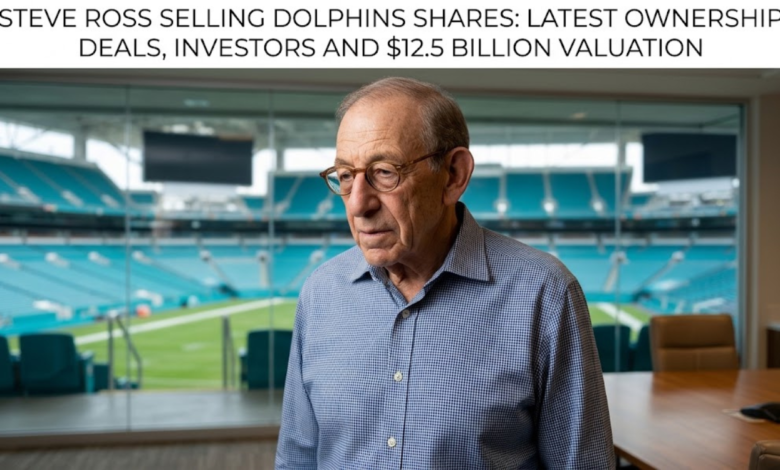
The story of Steve Ross selling Dolphins shares has attracted considerable attention in the sports and business worlds. Stephen M. Ross, the billionaire owner of the Miami Dolphins, has been bringing wealthy investors into his sports and entertainment business through minority ownership transactions. These deals have raised questions about who is buying the shares, how much the franchise is worth, and whether Ross intends to sell his controlling interest.
Rather than stepping away from the NFL, Ross has pursued a strategy that allows him to attract investment while maintaining control. With major investors from private equity, technology, and international finance entering the ownership structure, the transactions reveal how professional sports franchises have become some of the most valuable assets in the global entertainment industry.
Who Is Steve Ross and Why Does He Own the Miami Dolphins?
Stephen M. Ross is an American billionaire businessman, real estate developer, and sports investor. He founded Related Companies in 1972 and built it into one of the most recognized real estate development organizations in the United States. His business interests include commercial properties, residential developments, and major entertainment investments.
Ross became involved with the Miami Dolphins in 2008 and completed his acquisition of majority ownership in 2009. Over time, his business interests expanded beyond the football team to include Hard Rock Stadium and other major sporting properties in South Florida. This wider portfolio helps explain why Steve Ross selling Dolphins shares is about more than transferring ownership of an NFL franchise.
Why Is Steve Ross Selling Dolphins Shares?
The main reason behind Steve Ross selling Dolphins shares is to attract strategic investors while maintaining control of his sports and entertainment businesses. Selling minority interests allows Ross to generate liquidity without giving up his position as the organization’s principal owner. It also gives wealthy investors an opportunity to participate in the financial growth of professional sports.
Another important consideration is the expansion of the Dolphins’ associated businesses. Hard Rock Stadium, the Formula 1 Miami Grand Prix, and other sporting events create valuable commercial opportunities. Bringing in experienced investors can help strengthen these operations, support future developments, and create additional financial flexibility for the organization.
The 2024 Miami Dolphins Minority Ownership Sale
One of the most important ownership developments occurred in December 2024, when Ross announced an investment agreement involving Ares Management and prominent sports investors Joe Tsai and Oliver Weisberg. Ares acquired a 10% interest, while Tsai and Weisberg jointly purchased another 3%. The NFL approved the minority investment on December 11, 2024.
The agreement attracted attention because it represented an important example of institutional investment in professional football. The transaction included interests in the Dolphins’ broader sports and entertainment portfolio, rather than focusing exclusively on the football team. Contemporary reports placed the portfolio valuation at approximately $8.1 billion.
Who Bought Shares in the Miami Dolphins?
Several influential business figures have become minority investors in the Miami Dolphins’ organization. Ares Management brought institutional investment experience, while Joe Tsai and Oliver Weisberg contributed their backgrounds in international business and professional sports ownership. Their involvement expanded the organization’s network of financially influential partners.
Later transactions introduced additional investors, including Xiaomi co-founder Lin Bin and international financier Jean Eric Salata. These investments demonstrate the growing appeal of professional sports ownership among wealthy individuals and institutions. The opportunity to participate in a prestigious NFL organization, alongside connected entertainment properties, makes the Dolphins an attractive investment proposition.
Lin Bin’s Investment and the $12.5 Billion Valuation
In March 2026, Stephen Ross announced an agreement with Lin Bin, co-founder and vice chairman of Xiaomi. Lin agreed to acquire a 1% minority interest in the Dolphins and associated sports properties at a reported enterprise valuation of $12.5 billion. The NFL approved the transaction on March 31, 2026.
The investment highlighted the increasing financial value of Ross’s sports portfolio. At a $12.5 billion valuation, a 1% interest represents an illustrative value of approximately $125 million. However, this calculation should not automatically be treated as the confirmed purchase price because private transactions can involve additional financial arrangements and contractual considerations.
Jean Eric Salata’s Purchase of Dolphins Shares
Another major development in Steve Ross selling Dolphins shares came in October 2026, when Ross agreed to sell a 2.1% minority interest to Jean Eric Salata. Salata is a Chilean-born billionaire financier, founder of Baring Private Equity Asia, and chairman of Swedish investment company EQT AB.
The transaction was associated with a valuation of slightly more than $12.5 billion for the broader sports and entertainment portfolio. Based on a simplified calculation, a 2.1% stake at $12.5 billion would represent approximately $262.5 million. The NFL approved the transaction on October 23, 2026, further expanding the organization’s international investor base.
Miami Dolphins Ownership Deals Compared
The different ownership transactions demonstrate how Ross has gradually introduced new investors into his sports organization. Each agreement has involved different buyers and ownership percentages, while the broader business portfolio has remained an important part of the investment strategy.
The following table summarizes the major publicly reported transactions and their associated valuations.
| Year | Investor | Reported stake | Reported valuation |
|---|---|---|---|
| 2024 | Ares Management | 10% | Approximately $8.1 billion |
| 2024 | Joe Tsai and Oliver Weisberg | 3% combined | Included in 2024 transaction |
| 2026 | Lin Bin | 1% | $12.5 billion |
| 2026 | Jean Eric Salata | 2.1% | Slightly above $12.5 billion |
These figures relate to reported investments in the broader sports and entertainment portfolio. They should not be interpreted as separate valuations of the Miami Dolphins football franchise alone.
What Businesses Are Included in the Share Sales?
A common misunderstanding about Steve Ross selling Dolphins shares is that every transaction concerns only the football team. In reality, the investment arrangements have included interests in several connected sports and entertainment properties. This broader structure creates additional commercial opportunities for minority investors.
Hard Rock Stadium is one of the most important assets in the portfolio. It hosts Miami Dolphins games, major sporting competitions, concerts, and international events. The Formula 1 Miami Grand Prix and Miami Open tennis tournament also contribute to the organization’s business value through sponsorships, ticket sales, hospitality, media exposure, and event-related partnerships.
Does Steve Ross Still Control the Miami Dolphins?
Yes. Ross remains the principal owner of the Miami Dolphins despite selling minority interests to outside investors. These transactions have not represented a complete sale of the franchise. The investors participate financially, but they do not automatically receive the decision-making authority associated with controlling ownership.
Ross has also discussed his interest in keeping the franchise connected to his family over the long term. His daughters Jennifer and Kimberly and son-in-law Daniel Sillman have been identified in reports discussing the family’s future involvement. This suggests that his ownership strategy is focused on long-term continuity rather than an immediate departure from professional football.
Why the NFL Ownership Rules Matter
The NFL historically maintained strict rules concerning franchise ownership and the participation of outside investors. In August 2024, the league approved a framework allowing certain private equity firms to purchase minority interests in NFL teams. This decision created additional opportunities for institutional investment while preserving the traditional structure of controlling ownership.
The policy change helps explain why Steve Ross selling Dolphins shares became part of a larger development in professional sports. NFL franchises benefit from valuable broadcasting agreements, sponsorships, international exposure, and strong fan communities. Allowing approved investors to participate financially gives existing owners more flexibility without requiring them to surrender control of their organizations.
What Does the Sale Mean for the Future of the Dolphins?
Additional investment could support stadium improvements, entertainment projects, and commercial expansion. Hard Rock Stadium already provides a valuable platform for major sporting events, and further development could strengthen its international reputation. The organization’s wider portfolio also creates opportunities beyond the regular NFL season.
For Ross, minority ownership transactions provide financial flexibility while preserving his influence over the franchise. They also establish relationships with experienced investors who may contribute business knowledge and strategic opportunities. However, financial investment alone cannot guarantee success on the football field. Strong management, player development, coaching decisions, and consistent performances remain essential.
What Steve Ross Has Said About Selling His Ownership Stake
Ross has expressed considerable confidence in the long-term financial potential of professional football. In January 2026, he discussed receiving offers approaching $15 billion for the Dolphins but indicated that he was not interested in selling his controlling position. His comments highlighted the difference between accepting minority investments and transferring ownership of an entire franchise.
Ross has also expressed his confidence in the value of owning an NFL team, describing it as an exceptional business asset. His approach suggests that he sees greater long-term potential in maintaining control while allowing selected investors to participate financially. This strategy combines personal ownership, business expansion, and the possibility of future family involvement.
The Growing Value of NFL Franchises
The increasing valuation of the Miami Dolphins reflects a broader trend in professional sports. NFL franchises have become highly desirable investments because of their broadcasting rights, sponsorship agreements, merchandise opportunities, stadium operations, and international fan bases. Their limited availability also contributes to their financial appeal.
The developments surrounding Steve Ross selling Dolphins shares demonstrate how ownership structures are changing. Rather than selling entire organizations, billionaire owners can generate liquidity through carefully structured minority transactions. This approach allows investors to enter an established sports business while existing owners preserve their leadership positions.
Frequently Asked Questions
Is Steve Ross selling the Miami Dolphins?
Steve Ross has sold minority interests in the Dolphins and associated sports businesses. However, he has not announced a complete sale of the franchise and remains its principal owner.
Who bought shares in the Miami Dolphins from Steve Ross?
Major investors include Ares Management, Joe Tsai, Oliver Weisberg, Lin Bin, and Jean Eric Salata. Their investments were made through different transactions between 2024 and 2026.
How much of the Dolphins did Steve Ross sell in 2024?
The 2024 agreement involved a 10% interest for Ares Management and a combined 3% interest for Joe Tsai and Oliver Weisberg, representing 13% in total.
How much is Lin Bin’s Miami Dolphins investment worth?
Lin Bin agreed to purchase a 1% minority interest at a reported $12.5 billion portfolio valuation. A straightforward calculation suggests a value of approximately $125 million, although the actual purchase price was not publicly disclosed.
Who is Jean Eric Salata?
Jean Eric Salata is a billionaire financier who founded Baring Private Equity Asia and became chairman of EQT AB. He agreed to acquire a 2.1% minority interest in the Dolphins’ broader sports and entertainment portfolio in October 2026.
Does Steve Ross still own the majority of the Dolphins?
Yes. Ross remains the principal owner and maintains control of the organization. Minority investors have financial interests but do not automatically control the team’s operations.
Why is Steve Ross selling Dolphins shares instead of the entire team?
Selling minority interests allows Ross to generate liquidity, attract strategic partners, and support business expansion without giving up control. It also provides opportunities to maintain the family’s long-term connection to the franchise.
What is the Miami Dolphins’ valuation after the latest share sale?
The October 2026 transaction involving Jean Eric Salata was associated with a valuation of slightly more than $12.5 billion for the broader sports and entertainment portfolio.
Conclusion
The story of Steve Ross selling Dolphins shares highlights the changing financial landscape of professional sports ownership. Through partnerships with Ares Management, Joe Tsai, Oliver Weisberg, Lin Bin, and Jean Eric Salata, Ross has attracted influential investors while maintaining his position as the Dolphins’ principal owner.
The reported valuation exceeding $12.5 billion demonstrates the financial appeal of the organization’s wider sports and entertainment properties. From Hard Rock Stadium to Formula 1 and the Miami Open, these businesses provide opportunities that extend well beyond professional football.
Ultimately, Steve Ross selling Dolphins shares should be viewed as a strategic investment decision rather than an announcement of his departure. His approach combines outside capital, business expansion, and long-term ownership ambitions. As professional sports continue to attract global investors, the Miami Dolphins remain an interesting example of how billionaire owners can balance financial growth with control.
Read More: Alaina Urquhart Daughter Illness: What Is Known About Her Family and Children’s Health?